
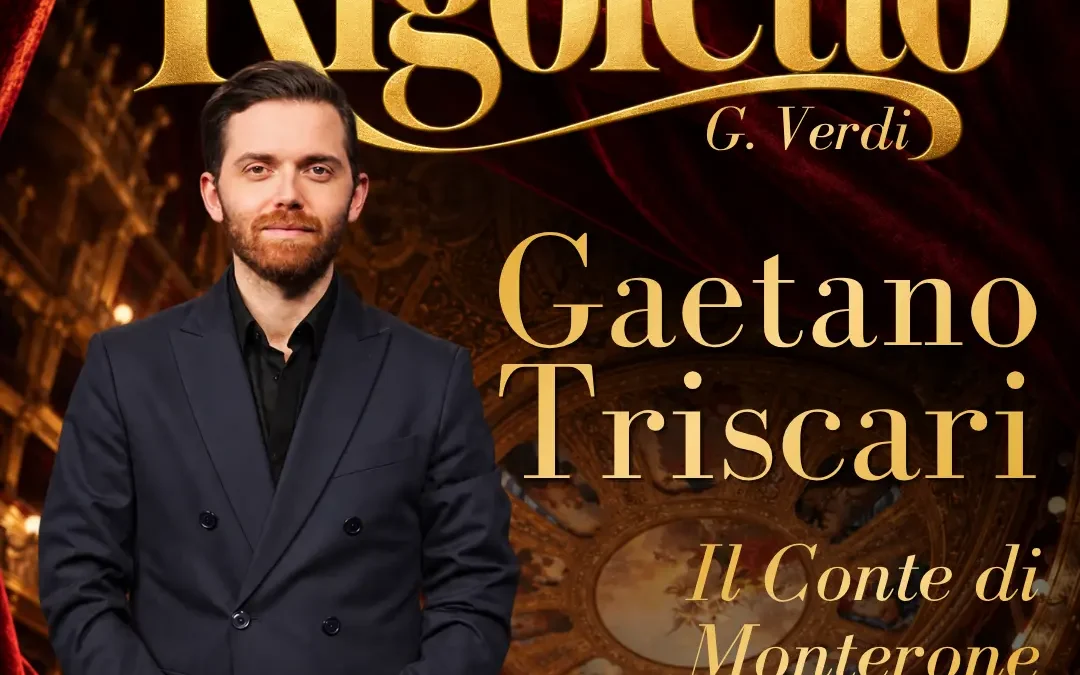
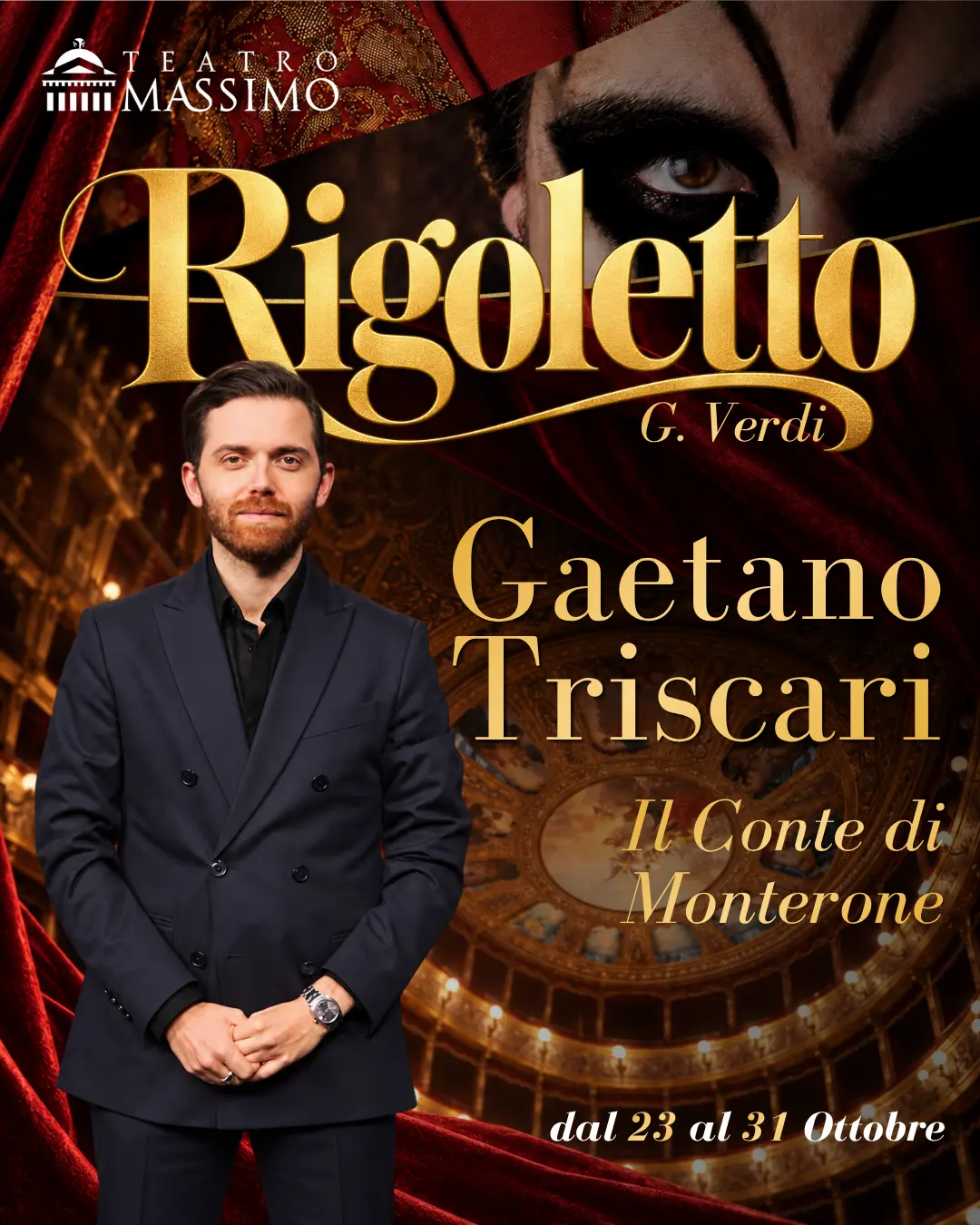
Bass Gaetano Triscari performs the role of Count Monterone in Giuseppe Verdi’s Rigoletto at the Teatro Massimo di Palermo, Italy, with performances scheduled for October 23, 24, 25, 27, 28, 29, 30 and 31, 2026.
The engagement brings Triscari back to a role already established in his repertoire, one whose dramatic significance extends well beyond its stage time. Count Monterone’s confrontation with the Duke of Mantua and Rigoletto sets in motion the tragic consequences at the heart of Verdi’s opera.
In Palermo, Triscari appears in the Teatro Massimo production conducted by Gianna Fratta and directed by John Turturro, with the staging revived by Lisa Capaccioli. The production features the Teatro Massimo Orchestra, Chorus and Ballet.
Performance Details
| Field | Details |
|---|---|
| Opera | Rigoletto |
| Composer | Giuseppe Verdi |
| Librettist | Francesco Maria Piave |
| Featured artist | Gaetano Triscari |
| Voice type | Bass |
| Role | Count Monterone |
| Company | Fondazione Teatro Massimo |
| Venue | Teatro Massimo – Main Stage |
| City / Country | Palermo, Italy |
| Gaetano Triscari performance dates | October 23, 24, 25, 27, 28, 29, 30 and 31, 2026 |
| Conductor | Gianna Fratta |
| Director | John Turturro |
| Staging revival | Lisa Capaccioli |
| Set designer | Francesco Frigeri |
| Costume designer | Marco Piemontese |
| Orchestra | Teatro Massimo Orchestra |
| Chorus | Teatro Massimo Chorus |
| Chorus Master | Salvatore Punturo |
| Production | Teatro Massimo production, in co-production with Teatro Regio Torino, Shaanxi Opera House and Opéra Royal de Wallonie |
Gaetano Triscari as Count Monterone
Count Monterone is a pivotal figure in Verdi’s Rigoletto. Although his appearances are relatively brief, the character carries exceptional dramatic weight. His public denunciation of the Duke of Mantua and his curse upon Rigoletto establish the moral and psychological conflict that drives the opera toward its devastating conclusion.
The role requires a bass capable of projecting authority, indignation and dramatic intensity. Monterone’s presence must convey both the dignity of an outraged father and the emotional force of a man demanding justice, making his confrontation with the court one of the defining moments of the first act.
For Gaetano Triscari, the Palermo engagement marks a return to a role he has performed in several Italian productions, including performances in Taormina, San Severo, Lecce and Rimini. His familiarity with Monterone reflects an established connection with Verdi’s dramatic language and the expressive demands of the Italian bass repertoire.
Triscari’s broader operatic career includes Banco in Macbeth, Sparafucile in Rigoletto, the King in Aida, Tom in Un ballo in maschera, and the Doctor in La traviata. His repertoire also encompasses roles such as Don Basilio in Rossini’s Il barbiere di Siviglia, Zuniga in Bizet’s Carmen and Cesare Angelotti in Puccini’s Tosca.
These roles highlight a vocal and theatrical profile grounded in dramatic authority, expressive clarity and the ability to give distinctive presence to characters whose influence on the narrative is often greater than their time on stage.
For biography, repertoire, media, press materials and booking enquiries, visit Gaetano Triscari’s Trucco Management artist profile or contact Trucco Management directly.